» » »
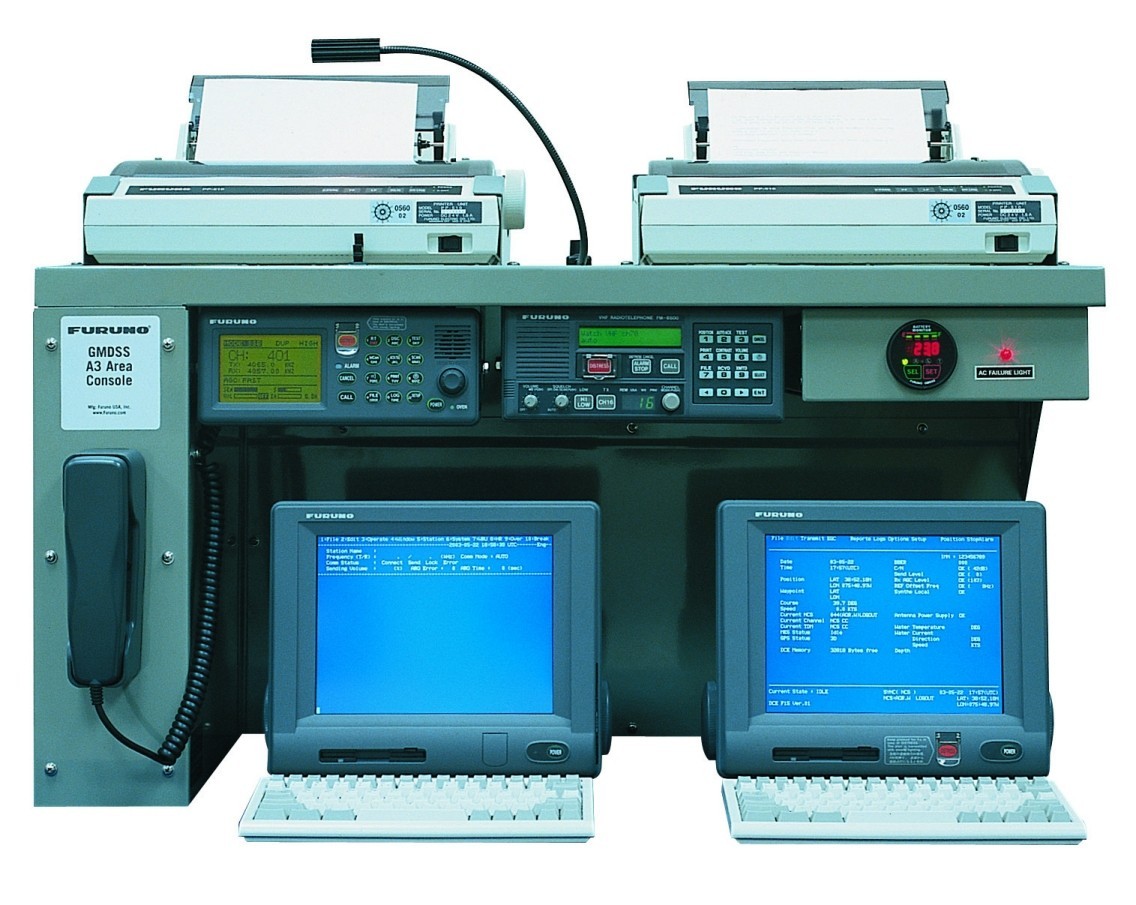
GMDSS, Global Maritime Distress Safety System
|
The Global Maritime Distress Safety System (GMDSS) is an
internationally agreed-upon set of safety procedures, types of
equipment, and communication protocols used to increase safety and make
it easier to rescue distressed ships, boats and aircraft.
|
All Products Index in
Alphabetical Order
|
 |
Carriage
Requirements for GMDSS A1:
- One VHF radio capable of DSC (Digital Selective
Calling) on channel 70 and voice communications on channel 16, 13 and 6.
- One SART (Search And Rescue Transponder) if
under 500 gross tons otherwise two.
- Two approved lifeboat portable VHF radios if
under 500 gross tons otherwise two.
- One Navtex receiver or an Inmarsat EGC receiver
if operating in an area where Navtex is not offered.
- One 406 MHz or a 1.6 GHZ satellite EPIRB,
(Emergency Position Indicating Radio Beacon). Note:
a VHF DSC EPIRB may replace the 406 MHz and 1.6 MHz EPIRB if operating
exclusively in area A1.
A2 (in
addition to A1 equipment):
- One MF (Medium Frequency) radio installation
capable of
transmitting and receiving on the frequencies 2187.5 kHz using DSC and
2182 kHz using radiotelephony.
- One DSC watch keeping receiver operating on
2187.5 kHz.
- One 406 MHz EPIRB. A HF radio installation
operating on working
frequencies in the (marine) bands between 1,605 kHz and 27,500 kHz.
(This requirement is normally fulfilled by the addition of this
capability in the MF equipment referred to in item 2).
A3 (in
addition to A1 and A2 equipment):
- One Inmarsat C ship earth station.
- One MF radio installation and 2187.5 kHz DSC
watch keeping receiver.
- One 406 MHz EPIRB.
OR
- One MF/HF radio installation capable of
transmitting and
receiving on all distress and safety frequencies in the (marine) bands
between 1,605 kHz and 27,500 kHz: using DSC, radiotelephony and NBDP
(Narrow Band Direct Printing Telex).
- One MF/HF DSC watch keeping receiver capable of
maintaining DSC
watch on 2187.5 kHz, 8,414.5 kHz and on at least one of the distress
and safety DSC frequencies 4207.5 kHz, 6312 kHz, 12577 kHz or 16804.5
kHz at any time. It is possible to select any of these DSC distress and
safety frequencies.
- One 406 MHz EPIRB.
- A4 (in addition to A1, A2 and A3
equipment):
- One MF/HF radio installation as described
earlier.
- One MF/HF DSC watch keeping receiver as
described earlier.
- One 406 MHz EPIRB. Note: Satellite based
systems do not operate in the A4 Polar Regions.
In addition to the carriage requirements, regulation 15 of the SOLAS
GMDSS regulations defines 3 methods to ensure availability of GMDSS
equipment at sea.
- At sea electronic maintenance, requiring the
carriage of a qualified radio/electronic officer (holding a GMDSS First
or Second Class Radio-Electronics Certificate) with adequate spare
parts and service manuals.
- Duplication of certain equipment, or;
- Shore based maintenance contracts. Almost
exclusively vessel operators opt for duplication of equipment or shore
based maintenance contracts.
Recreational vessels do not need to comply with GMDSS radio carriage
requirements, but will increasingly use the Digital Selective Calling
(DSC) VHF radios and offshore vessels may elect to equip themselves
further. Vessels under 300 Gross tonnage (GT) are not subject to GMDSS
requirements and vessels from 300 to 500 GT have less restrictive
carriage requirements than vessels 500 GT and over.
|
|
GMDSS (Global Marine Distress & Safety)
GMDSS, Global Maritime Distress Safety System
The Global Maritime Distress Safety System (GMDSS) is an
internationally agreed-upon set of safety procedures, types of
equipment, and communication protocols used to increase safety and make
it easier to rescue distressed ships, boats and aircraft.
...
[Show More]
Contact
us today for a free consultation!
Furuno
GMDSS
JRC
GMDSS
Simrad
GMDSS
All Products Index in
Alphabetical Order
Carriage
Requirements for GMDSS A1:
One VHF radio capable of DSC (Digital Selective
Calling) on channel 70 and voice communications on channel 16, 13 and 6.
One SART (Search And Rescue Transponder) if
under 500 gross tons otherwise two.
Two approved lifeboat portable VHF radios if
under 500 gross tons otherwise two.
One Navtex receiver or an Inmarsat EGC receiver
if operating in an area where Navtex is not offered.
One 406 MHz or a 1.6 GHZ satellite EPIRB,
(Emergency Position Indicating Radio Beacon). Note:
a VHF DSC EPIRB may replace the 406 MHz and 1.6 MHz EPIRB if operating
exclusively in area A1.
A2 (in
addition to A1 equipment):
One MF (Medium Frequency) radio installation
capable of
transmitting and receiving on the frequencies 2187.5 kHz using DSC and
2182 kHz using radiotelephony.
One DSC watch keeping receiver operating on
2187.5 kHz.
One 406 MHz EPIRB. A HF radio installation
operating on working
frequencies in the (marine) bands between 1,605 kHz and 27,500 kHz.
(This requirement is normally fulfilled by the addition of this
capability in the MF equipment referred to in item 2).
A3 (in
addition to A1 and A2 equipment):
One Inmarsat C ship earth station.
One MF radio installation and 2187.5 kHz DSC
watch keeping receiver.
One 406 MHz EPIRB.
OR
One MF/HF radio installation capable of
transmitting and
receiving on all distress and safety frequencies in the (marine) bands
between 1,605 kHz and 27,500 kHz: using DSC, radiotelephony and NBDP
(Narrow Band Direct Printing Telex).
One MF/HF DSC watch keeping receiver capable of
maintaining DSC
watch on 2187.5 kHz, 8,414.5 kHz and on at least one of the distress
and safety DSC frequencies 4207.5 kHz, 6312 kHz, 12577 kHz or 16804.5
kHz at any time. It is possible to select any of these DSC distress and
safety frequencies.
One 406 MHz EPIRB.
A4 (in addition to A1, A2 and A3
equipment):
One MF/HF radio installation as described
earlier.
One MF/HF DSC watch keeping receiver as
described earlier.
One 406 MHz EPIRB. Note: Satellite based
systems do not operate in the A4 Polar Regions.
In addition to the carriage requirements, regulation 15 of the SOLAS
GMDSS regulations defines 3 methods to ensure availability of GMDSS
equipment at sea.
At sea electronic maintenance, requiring the
carriage of a qualified radio/electronic officer (holding a GMDSS First
or Second Class Radio-Electronics Certificate) with adequate spare
parts and service manuals.
Duplication of certain equipment, or;
Shore based maintenance contracts. Almost
exclusively vessel operators opt for duplication of equipment or shore
based maintenance contracts.
Recreational vessels do not need to comply with GMDSS radio carriage
requirements, but will increasingly use the Digital Selective Calling
(DSC) VHF radios and offshore vessels may elect to equip themselves
further. Vessels under 300 Gross tonnage (GT) are not subject to GMDSS
requirements and vessels from 300 to 500 GT have less restrictive
carriage requirements than vessels 500 GT and over.
Contact
us today for a free consultation!Furuno
GMDSSJRC
GMDSSSimrad
GMDSSAll Products Index in
Alphabetical Order


