


Marine VHF Radios - Both Fixed Mount and Portable - Are Required By the Coast Guard on Most Vessels |
|||||||||
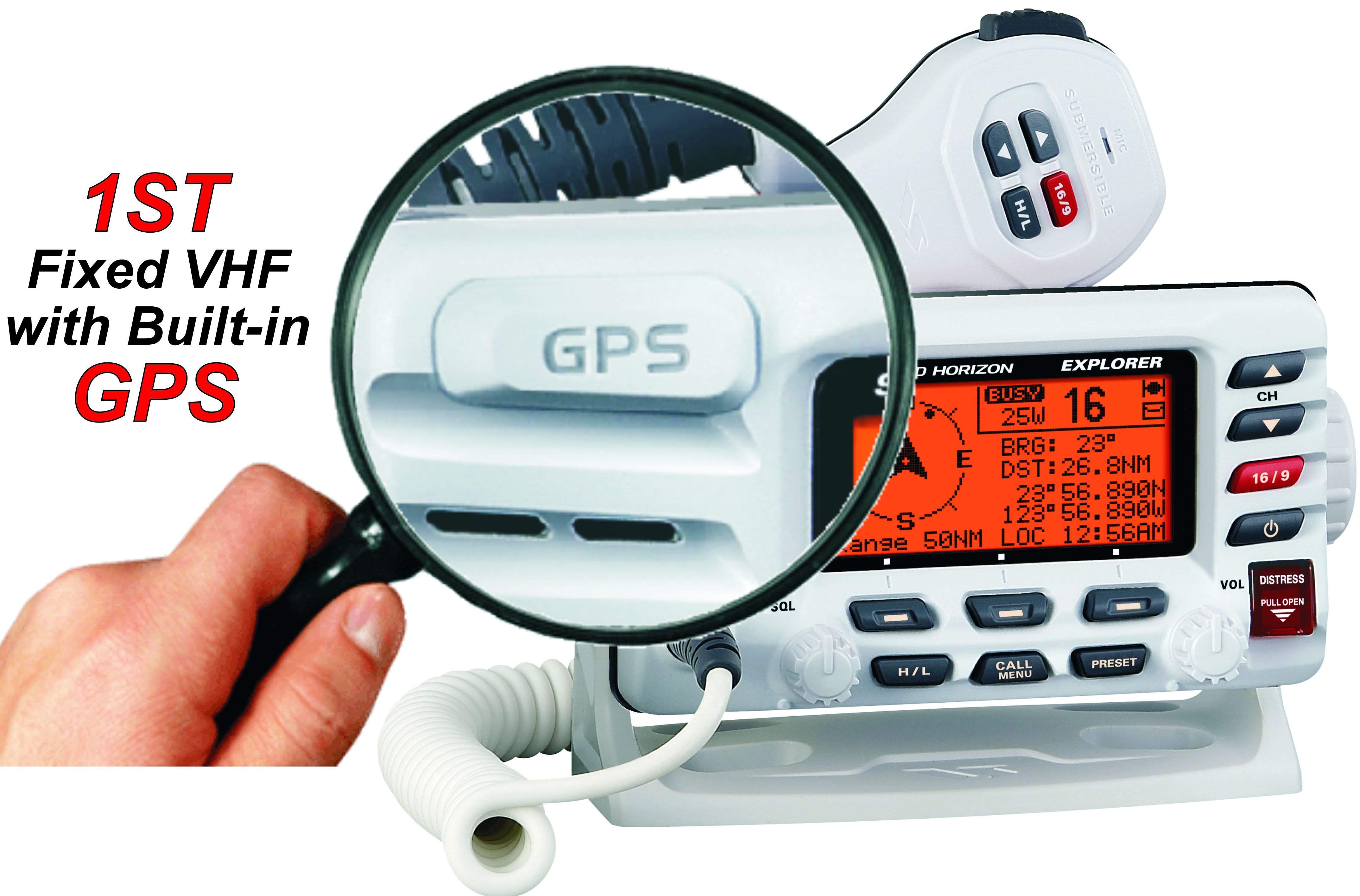
A Fixed Marine VHF Radio generally has the advantages of a more reliable power source, higher transmit power, a larger and more effective aerial, and a bigger display and buttons. A portable set (often essentially a waterproof, VHF walkie-talkie in design) can be carried to a lifeboat in an emergency, has its own power source and is more easily water-proofed.Marine radios can be "voice-only" or can include "Digital Selective Calling" (DSC). Voice-only equipment is the traditional type, which relies totally on the human voice for calling and communicating. |
|||||||||
| Fixed Mount Marine VHF Marine VHF is a critical piece of electronics for all modern navigation.We offer fixed mount VHF radios from premier providers
All Products Index in Alphabetical Order |
 |
||||||||
|
|
|||||||||
Marine Fix Mount VHF Radios
Marine
VHF Radios - Both Fixed Mount and Portable - Are Required By the
Coast Guard on Most Vessels
A Fixed Marine VHF Radio generally has the advantages of a more reliable power source, higher transmit power, a larger and more effective aerial, and a bigger display and buttons. A portable set (often essentially a waterproof, VHF walkie-talkie in design) can...
[Show More]
Contact us today for a free consultation!
Furuno VHF Fixed Mount
Garmin VHF Fixed Mount
ICOM Marine VHF Fixed Mount
JRC VHF Fixed Mount
Raymarine VHF Fixed Mount
SEA VHF Fixed Mount
Simrad VHF Fixed Mount
Standard Horizon VHF Fixed Mount
All Products Index in Alphabetical Order


